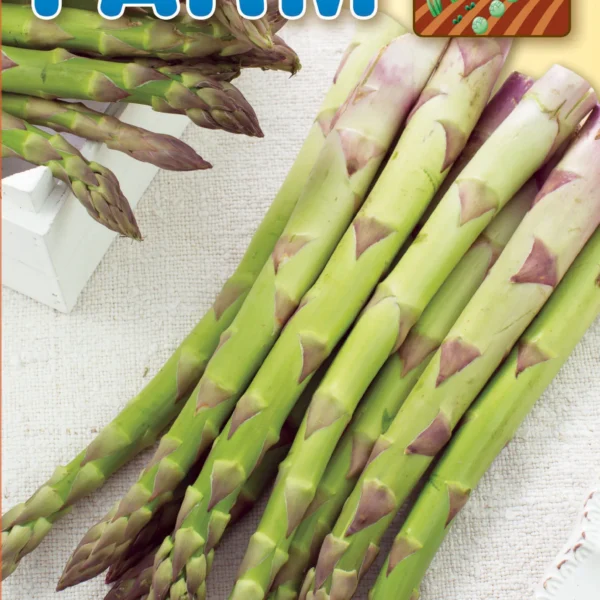

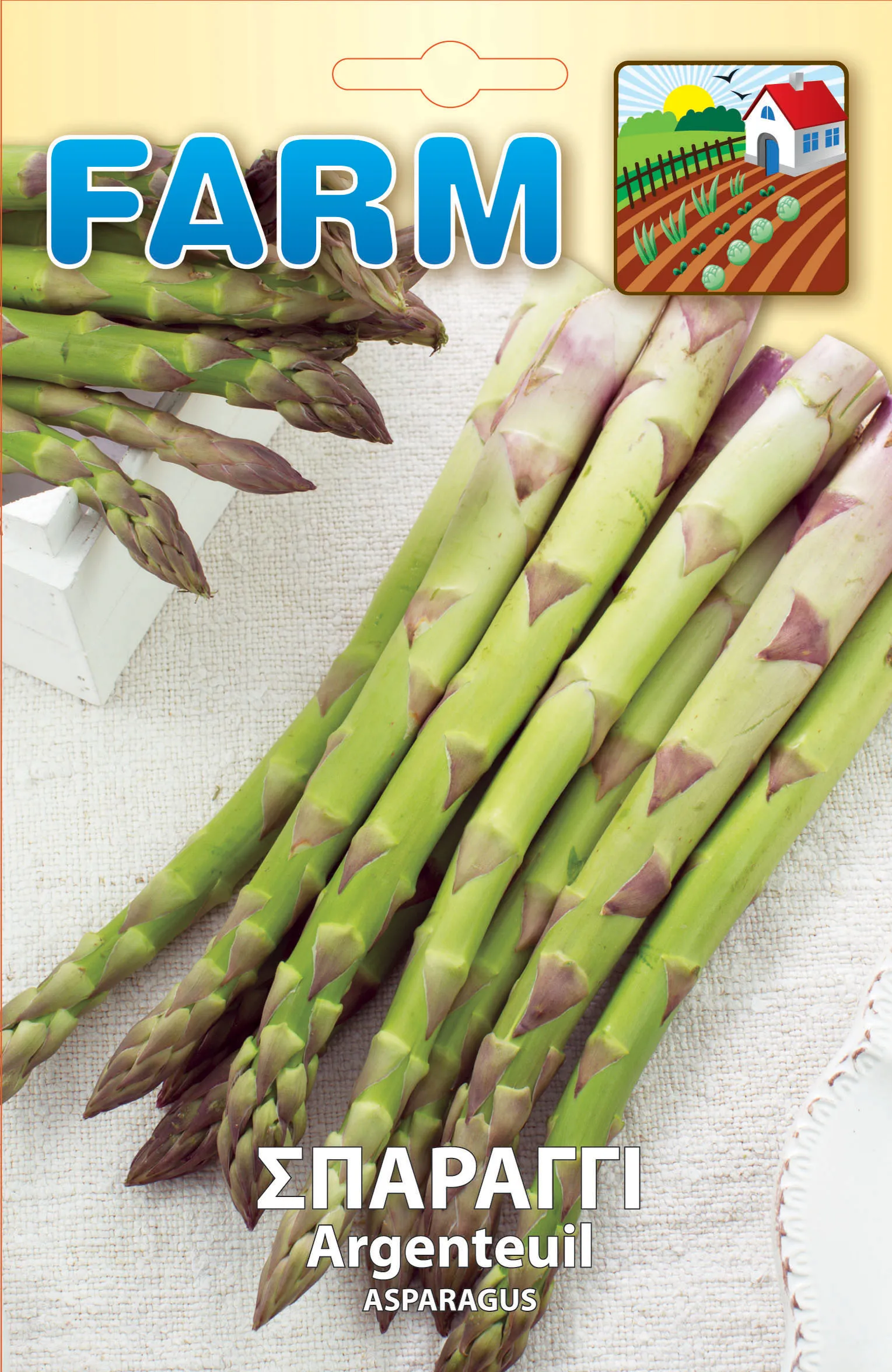
A perennial crop of the Asparagaceae family, cultivated for its tender young shoots, a delicacy in gourmet cuisine. Asparagus seeds produce vigorous plants with deep root systems and long productive lifespan, lasting 10–15 years in the same location.
It thrives in cool to mild climates and prefers light, fertile, well-drained soils rich in organic matter, with a pH between 6.5 and 7.5. Sowing takes place from February to May in seedbeds, and transplanting occurs the following autumn or spring. Spacing should be 30–40 cm between plants and 120–150 cm between rows. The first harvest occurs 2–3 years after planting, followed by annual spring harvests for many years.
The shoots are tender, aromatic, and flavorful, either green or white depending on cultivation method. Asparagus is rich in vitamins A, C, E, and K, folate, potassium, and antioxidants, while being low in calories. It is prized for its delicate flavor and high nutritional value, used in salads, omelets, and fine dishes.