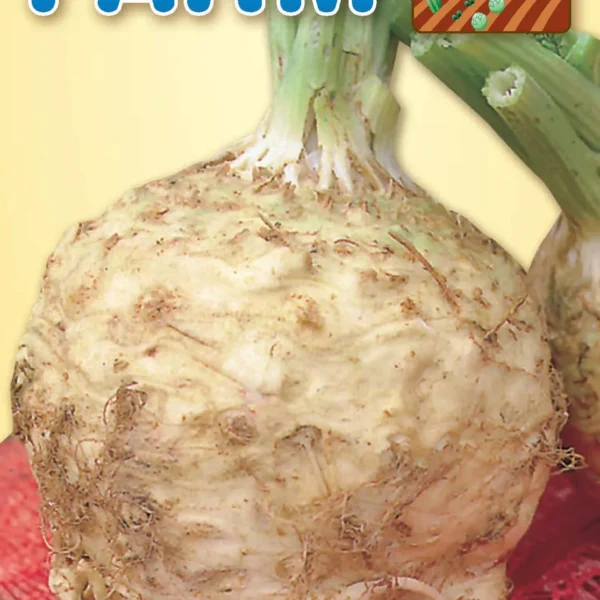


A root vegetable of the Apiaceae family, cultivated for its large, aromatic, fleshy root with mild flavor and crisp texture. Celeriac seeds produce vigorous, cold-tolerant plants with well-developed roots and lush foliage. The root is round, cream-colored, and rich in essential oils and minerals, offering both culinary and nutritional value.
This crop prefers cool to mild climates and thrives in deep, fertile, well-drained soils rich in organic matter. Sowing takes place from February to April in seedbeds, with transplanting once seedlings reach 10–15 cm in height. Spacing should be 25–30 cm between plants and 40–50 cm between rows. Harvesting begins 120–150 days after transplanting, when roots reach 8–12 cm in diameter.
Celeriac is rich in vitamins C and K, potassium, sodium, and antioxidants. It is ideal for soups, stews, purees, and salads, providing a distinctive aroma and refined flavor. The variety stands out for its high productivity, cold resistance, and excellent root quality.